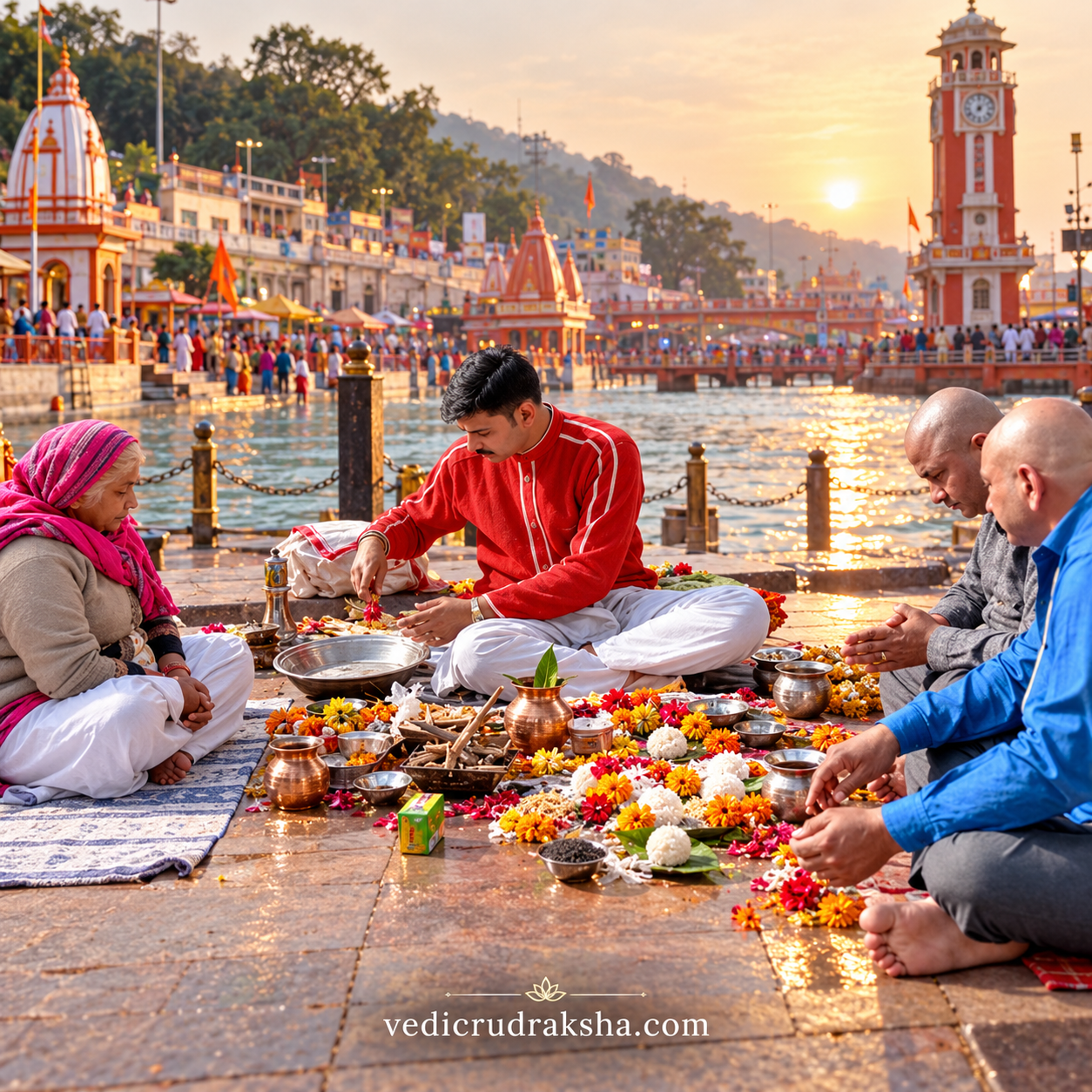
Shradh Puja at Har Ki Pauri, Haridwar is a sacred Hindu ritual performed in remembrance of departed ancestors. During Pitru Paksha, devotees offer prayers, Tarpan, Pind Daan and other traditional rituals to express gratitude and respect toward their forefathers.
Haridwar, situated on the holy banks of Maa Ganga, has been one of India’s most important pilgrimage destinations for generations. Among its sacred places, Har Ki Pauri holds special importance for spiritual rituals connected with ancestors.
Shradh Puja is a traditional Hindu ceremony performed for departed family members and ancestors. The word “Shradh” is associated with श्रद्धा — faith, devotion and sincerity.
During the puja, family members remember their ancestors and make ritual offerings according to family customs and religious traditions. Depending on the ceremony, the rituals may include:
The exact ritual may vary according to family tradition, gotra, local customs and the guidance of the Pandit.
Pitru Paksha is a special period in the Hindu calendar dedicated to remembering ancestors. Families traditionally perform Shradh, Tarpan and Pind Daan during this time.
For many devotees, Pitru Paksha is a period of remembrance, gratitude and spiritual reflection. It is also a time when families continue traditions passed down through generations.
Rather than being only a ritual, Shradh is also an expression of respect toward one’s lineage and family heritage.
Har Ki Pauri is one of the most revered ghats in Haridwar. Devotees from across India and abroad visit this sacred place for Ganga Snan, Tarpan, Shradh, Pind Daan, Deep Daan and other religious ceremonies.
Performing Shradh Puja at Har Ki Pauri is considered meaningful by many Hindu families because the rituals are performed near the sacred waters of Maa Ganga.
The spiritual atmosphere of Haridwar, the sound of Vedic mantras and the presence of the holy Ganga create a deeply devotional setting for ancestral rituals.
Tarpan is a traditional water-offering ritual performed in remembrance of ancestors. Water is offered while prayers and mantras are recited.
The ritual symbolizes remembrance, gratitude and respect for departed family members.
During Pitru Paksha, many devotees visit Haridwar specifically to perform Pitru Tarpan on the banks of the Ganga.
Pind Daan is another traditional ritual associated with Shradh ceremonies. Pinds are generally prepared using ingredients such as rice, flour, sesame and other ritual materials according to local and family customs.
These offerings are made with prayers in the name of departed ancestors.
A qualified Pandit generally guides the devotee through the procedure and explains which rituals are appropriate for the family.
Shradh Puja may be performed in remembrance of:
The person performing the ritual usually provides the names of ancestors, gotra and other details required for Sankalp.
If some details are not known, the Pandit may guide the family according to traditional practices.
A typical Shradh Puja may begin with a Sankalp, in which the devotee states the purpose of the ceremony.
This may then be followed by:
1. Sankalp
The devotee provides the necessary family and ancestor details.
2. Ganesh or preliminary prayers
The ceremony may begin with introductory prayers according to the chosen ritual.
3. Pitru Tarpan
Water is offered with prayers and mantras.
4. Pind Daan
Traditional offerings may be prepared and offered for the ancestors.
5. Pitru Shanti prayers
Mantras and prayers are recited in remembrance of departed family members.
6. Daan or Brahman Bhojan
Depending on family tradition and the selected seva, food donation, Brahman Bhoj or other charitable activities may also be performed.
The precise sequence can differ according to religious tradition and the Pandit conducting the ceremony.
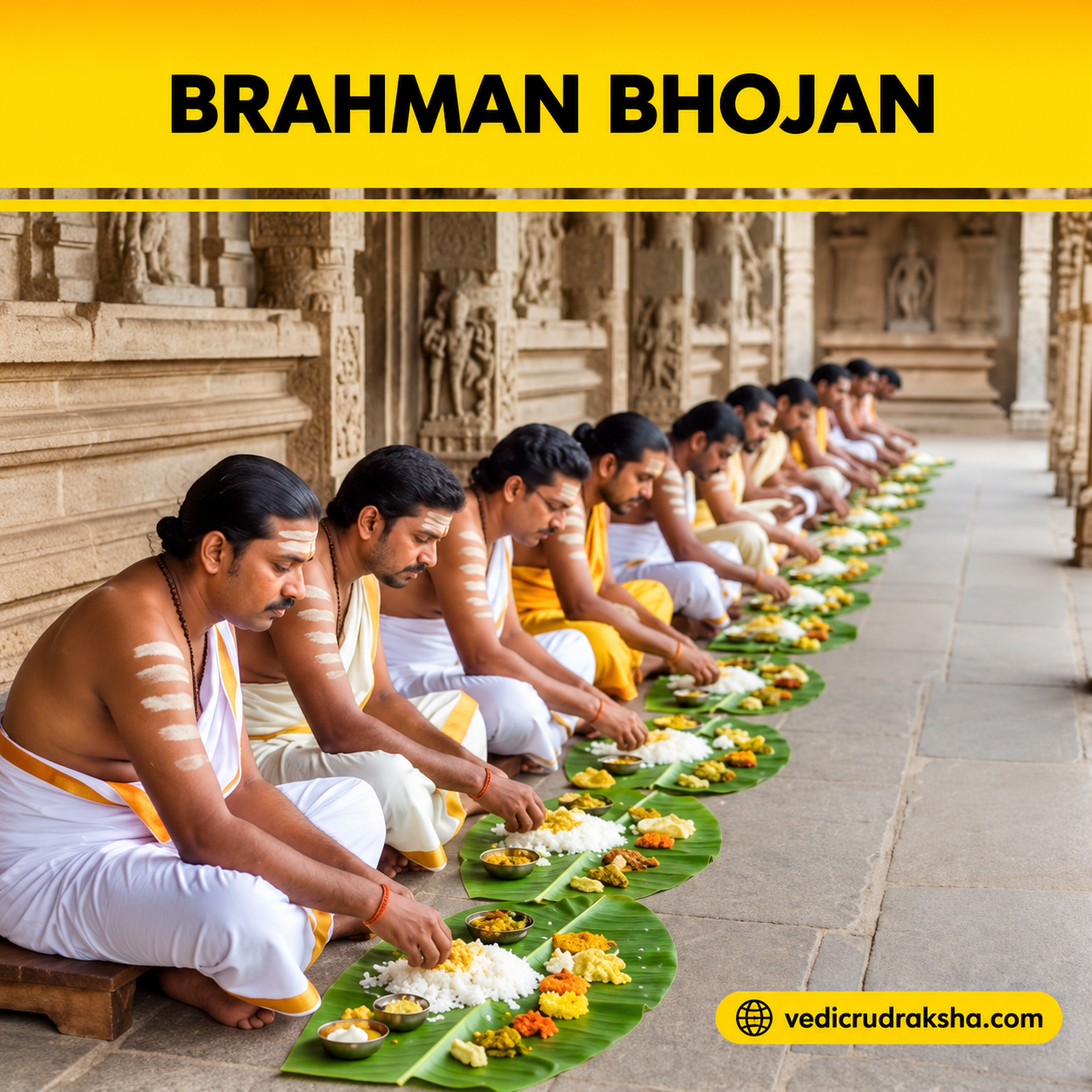
Brahman Bhojan is traditionally associated with many Shradh ceremonies.
After completing the rituals, a vegetarian meal may be respectfully served to Brahmins as an act of Daan and Seva.
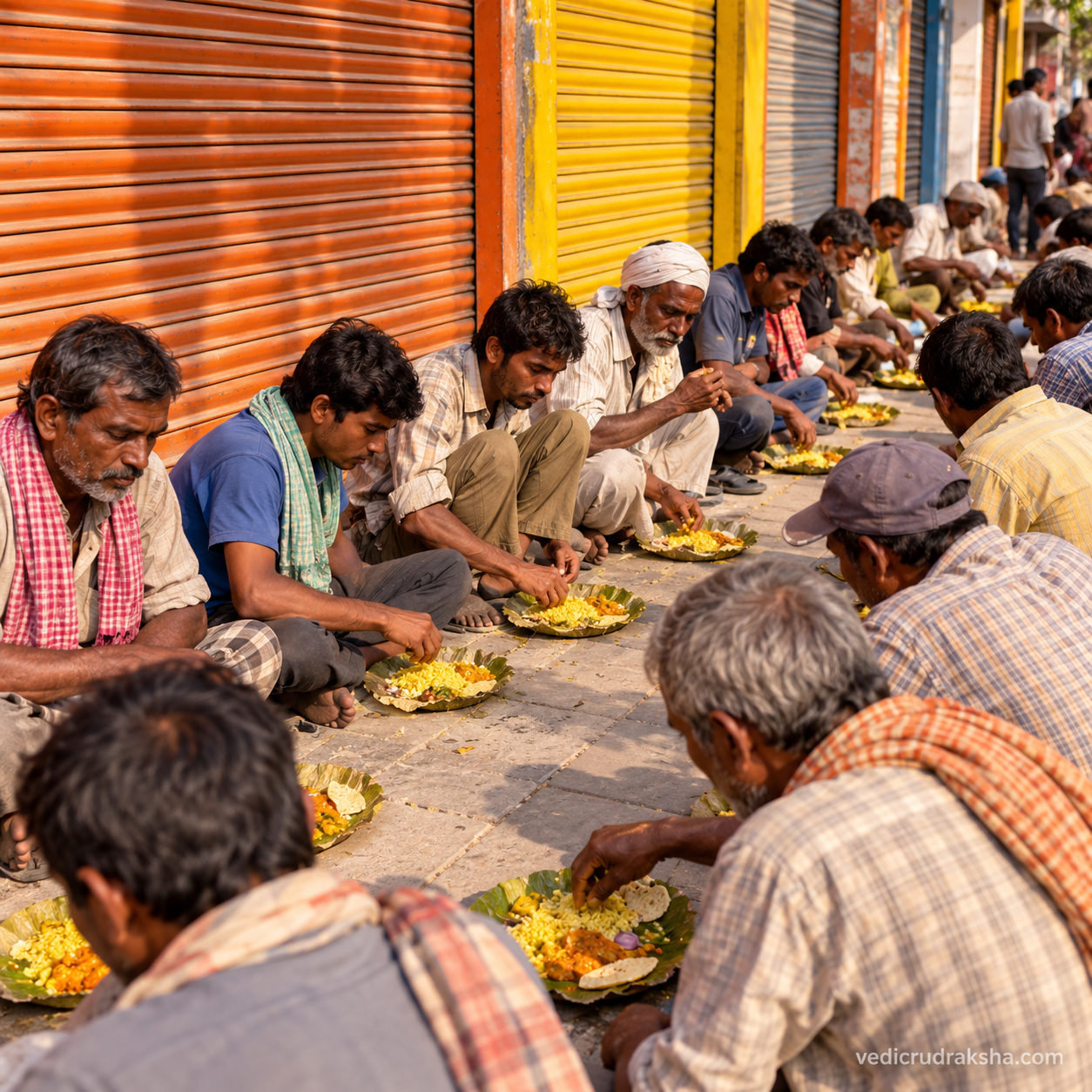
Some families also choose to distribute food to people in need or participate in other charitable activities.
The intention behind these acts is gratitude, remembrance and service.
Not every devotee is able to travel to Haridwar personally. Distance, work commitments, age or other circumstances can sometimes make travel difficult.
In such situations, devotees may choose to arrange Online Shradh Puja in Haridwar through a local puja service.
Depending on the service offered, devotees may provide:
Available features such as photos, video or live participation should be confirmed directly before booking.
Shradh Puja can be performed on several traditional occasions, including:
For the correct date and ritual for a particular ancestor, families may consult a knowledgeable Pandit.
Many Indian families now live outside India but still wish to maintain their ancestral traditions.
An organized Shradh Puja service in Haridwar can help such families arrange the ceremony without being physically present.
Before booking, devotees should confirm what the service includes, such as the puja location, Pandit, materials, Tarpan, Pind Daan, Brahman Bhojan, photographs or live streaming.
Haridwar has long been associated with ancestral rituals and sacred ceremonies on the banks of Maa Ganga.
Families choose Haridwar because of its:
Har Ki Pauri remains one of the most recognized spiritual locations in the city.
Devotees looking to arrange Shradh Puja, Pitru Paksha Puja, Tarpan or Pind Daan in Haridwar can explore the available seva options through Shiv Ganga Rudraksha Kendra, Haridwar.
Visit vedicrudraksha.com for service details and booking information.
Before confirming, check the exact puja inclusions, date, timing, location and participation options so the ceremony can be arranged according to your family’s requirements.
Shradh Puja during Pitru Paksha is a meaningful Hindu tradition centered on remembrance, gratitude and respect for ancestors.
Performing Shradh Puja at Har Ki Pauri, Haridwar allows devotees to observe these traditions in the sacred environment of Maa Ganga.
Whether a family performs Tarpan, Pind Daan, Brahman Bhojan or another traditional seva, the most important element remains Shraddha — sincere faith and remembrance.
₹11,000.00 Original price was: ₹11,000.00.₹5,100.00Current price is: ₹5,100.00.
₹11,000.00 Original price was: ₹11,000.00.₹5,100.00Current price is: ₹5,100.00.
₹5,100.00 Original price was: ₹5,100.00.₹2,100.00Current price is: ₹2,100.00.





Shiv Ganga Rudraksha Kendra Haridwar Rudraksha Shop Haridwar
Connecting You to Spiritual Power with Authentic Rudraksha & Gemstones.
Developed by TEJOMAYA ONEwAY INNOVATION LLP